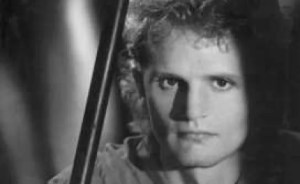
80s Snapshot:
- Number of songs on Hot 100: 1
- Highest peak position: 95
- Cumulative weeks on Hot 100: 2
Throughout this journey we will encounter plenty of actors-turned-musicians, to varying degrees of success. Much rarer though is encountering someone whose initial career highlights came in music, but is better known today as an actor. Our first instance of that phenomenon comes here with the story of Nick Jameson.
Raised in Philadelphia, Jameson’s first musical foray was with local band The American Dream, whose self-title 1970 album became the first production credit in Todd Rundgren’s illustrious career. Jameson moved to production himself and rose to prominence by producing Foghat’s fourth album Rock and Roll Outlaws. After that album’s success, he was brought on as an additional fourth member for the band’s next album.
Fool For The City, with Jameson producing while also playing bass plus a variety of other instruments, became Foghat’s breakthrough and greatest success. In addition to going platinum, the album spawned two of the band’s signature songs, the title track and “Slow Ride”, whose middle eight features a distinct Jameson bass riff. Jameson also produced Foghat’s 1977 live album which went 2x platinum, additionally featuring as one of the percussionists on the recording.
Fresh off that success with Foghat, Jameson went to work on recording his debut solo album, Already Free, which also released in 1977. The bass-heavy blues rock album wasn’t too far off from Foghat’s sound but saw no commercial success. A few years later, Jameson renewed his relationship with Foghat, producing their 1981 album Girls To Chat & Boys To Bounce. He also played keyboards and contributed backing vocals to the album, whose “Live Now – Pay Later” made #15 on the Album Rock Tracks chart and bubbled under the Hot 100 at #102. Jameson was back in his older role of producer and bass player for 1982’s In The Mood For Something Rude, which spawned the single “Slipped, Tripped, Fell In Love” (#12 on the Album Rock Tracks chart). Under a pair of pseudonyms, Jameson also produced and played on 1983’s Zig-Zag Walk, Foghat’s final album before a decade-long hiatus.
With Foghat on hiatus, Jameson again resumed his solo career, releasing his second album A Crowd Of One on Motown Records in 1986. Abandoning the classic rock sound for the more en vogue synthpop-rock of the mid-80s, the album is almost a dead ringer for the sounds of Mr. Mister or Richard Marx’s early hits. The single “Weatherman” debuted at #95 on the 8/23/1986 Hot 100 and spent both of its two weeks on the chart at that peak position. While only a minor chart success, the song was covered almost note-for-note as “Weatherman Says” the following year by Jack Wagner (one of the many actor-turned-singers I alluded to earlier) and reached #67 on the Hot 100.
Jameson’s career pivoted from music to acting in the 90s, becoming a prolific voice actor across film, television and video games. Among hundreds of credits, his voice can be heard across many Star Wars properties of this time frame, voicing Palpatine in several video games as well as the original Star Wars: Clone Wars Cartoon Network series. Even more than his lengthy careers in music and voice acting, Jameson’s fame to modern audiences is from a pair of minor but memorable live-action television roles. He played the psychic Richard Malkin on a few episodes of Lost, and more prominently featured as Russian president Yuri Suvarov across three seasons of 24. From the “Slow Ride” bass riff played by millions on Guitar Hero III to voice roles in dozens of beloved properties, Nick Jameson’s work continues to be enjoyed to this day across all forms of entertainment, even if he never became a household name.
Next: RCR
Previous: Hagar Schon Aaronson Shrieve
 Every 80s Artist: A Ranked Journey
Leave a comment