80s Snapshot:
- Number of songs on Hot 100: 1
- Highest peak position: 94
- Cumulative weeks on Hot 100: 2
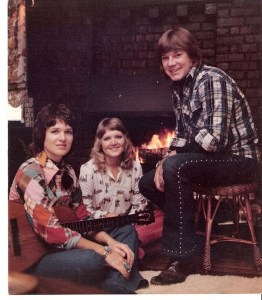
The trio of Sandra Rhodes, Charlie Chalmers and Donna Rhodes never quite became stars or household names in their own right. That said, their prolific work as background singers and session musicians is an integral part of the Memphis sound that dominated the soul and R&B output of the 60s and 70s. Their voices and instrumentation can be heard on some of the biggest hits of the era, including a handful of Number One hits.
Sisters Sandra and Donna Rhodes were the second generation of Memphis country royalty. Their parents Dusty (part of the Log Cabin Mountaineers with his three siblings) and Dot were beloved country performers whose local television program The Rhodes Show was seen on Memphis TVs from 1948 to 1975. At just 16 years old, Sandra wrote the Skeeter Davis track “How Much Can A Lonely Heart Stand”, which reached #92 on the Hot 100 in 1964. The sisters also recorded that track as The Rhodes Sisters, and across the rest of the 60s, the duo recorded under both that name and as The Lonesome Rhodes. The pair released a handful of singles as well as one self-titled album in 1967.
Fellow Memphis native Charlie Chalmers rose to prominence as a touring saxophonist for Jerry Lee Lewis. He quickly became a critical session player both at Hi Records in Memphis and Atlantic Records in Muscle Shoals, Alabama. His presence at two of the most important studios for soul and R&B in the late 60s put his playing at the forefront of some of the biggest hits of the era. Most notably, he helped arranged the sax/horn arrangements for Aretha Franklin’s breakout hits, and his playing can be heard on “Respect” and “Chain Of Fools” which respectively won the first two Grammy Awards for Best Female R&B Vocal Performance. He also played on Wilson Pickett’s signature hits “Mustang Sally” and “Land Of A Thousand Dances”.
During the late 60s, the Rhodes sisters were equally busy providing backing vocals on a variety of major hits in their own right. Highlights from this period include backing B.J. Thomas on “Hooked On A Feeling”, Neil Diamond on “Sweet Caroline” and “Brother Love’s Traveling Salvation Show”, and Elvis Presley on “In The Ghetto” and his final No. 1 hit “Suspicious Minds”. Around this time, Sandra and Chalmers got married, and the two stories of Chalmers and the Rhodes sisters converge from this point forward.
Charlie and Sandra were initially signed as a songwriting/production duo to Chess Records, the label that had released Chalmers’ solo album Sax And The Single Girl in 1967. But teaming up with Donna, the group’s first success as a trio came back in Memphis for the work with Hi Records’ biggest star, Al Green. They provided backing vocals and arrangements to all five of Green’s gold and platinum studio albums in the 70s, featuring on seven Top-10 hits including the number one smash “Let’s Stay Together”. As a trio they also backed soul hits by Candi Staton, Ann Peebles, Clarence Carter and O.V. Wright. During this time, Donna and Sandra each recorded solo albums of their own, with Donna’s I See Love released in 1971 and Sandra’s Where’s Your Love Been in 1973.
Their career took a sharp turn from Memphis soul to Vegas croon when they began a relationship in the mid-70s with Paul Anka. After providing background vocals for his No. 1 hit “(You’re) Having My Baby”, they backed Anka for three years at his Caesars Palace residency in Las Vegas. Chalmers set up a studio in Las Vegas during this time, leading them to also work on some Frank Sinatra recordings from this era. As Rhodes, Chalmers and Rhodes, they released a pair of singles in 1975 for Warner Bros. Records; neither “Look At Me And Love Me” nor “Out Of My Mind” were commercially successful.
The late 70s saw the trio re-locate to Miami and become a part of the burgeoning disco scene. Their backing vocals could be heard throughout the late 70s on recordings by KC And The Sunshine Band, the Bee Gees and Andy Gibb. Combining all of their career influences to date, the trio (with their collective name shortened to RCR) put out their first album Scandal for Radio Records in 1980. The title track, whose harmonies and southern rock sensibilities sound a lot like Fleetwood Mac’s hit “You Make Lovin’ Fun”, became the trio’s first mainstream breakthrough as artists in their own right. “Scandal” debuted at #94 on the 4/5/1980 Hot 100 and spent a second week at #94 before falling off the chart. The follow-up single “Give It To You” was more of a Bee Gees-style disco number and bubbled under the Hot 100, hitting a peak of #108 in July of 1980.
Though the group’s commercial fortunes waned in the 80s, they remained prolific members of the music industry. Charlie and Sandra co-wrote Conway Twitty’s 1981 hit “The Clown” which hit No. 1 on the country charts. In addition to the many aforementioned artists, others who recorded songs written by the trio include Boz Scaggs, Isaac Hayes, the Oak Ridge Boys and the Staple Singers. In the late 80s, Chalmers helped country star Mel Tillis open a theater in Branson, Missouri, and he continues to work and perform at that entertainment hub to this day. Sandra is no longer married to Charlie, but the Rhodes sisters also continue to perform both as a duo and under the old Rhodes Family moniker. The trio’s contributions to the Memphis sound was recognized in 2024 when they were inducted to the Memphis Music Hall Of Fame.
Next: Richie Furay
Previous: Nick Jameson
 Every 80s Artist: A Ranked Journey
Leave a comment